

How to Choose the Perfect Kurta for Your Body Type

A kurta has the power to make any man look effortlessly stylish - but only when it's chosen correctly. Walk into any store or scroll through any online catalogue of traditional wear for men, and you'll find dozens of cuts, lengths, and fabrics. The difference between a kurta that flatters you and one that simply hangs on you often comes down to one factor most buyers overlook: body type.
Just like a well-fitted suit transforms a man's silhouette, a well-fitted men's kurta dress can do the same for traditional wear. In this guide, we'll break down how to identify your body type and choose a kurta that enhances your shape, balances proportions, and looks polished from every angle.
Why Body Type Matters When Choosing a Kurta
Unlike fitted Western wear, kurtas are loose by design - which makes them forgiving, but also means small details in cut and length can make a big visual difference. A kurta that works beautifully on a tall, lean frame might overwhelm a shorter build. Similarly, a structured, tailored kurta that flatters a broader frame might look stiff on someone with a slender frame.
Choosing traditional wear for men based on body type isn't about hiding your shape - it's about creating visual balance so the outfit works with your natural proportions rather than against them.
Identify Your Body Type First
Before diving into kurta styles, it helps to know which broad category you fall into:
- Slim/Lean build – Narrow shoulders, lean frame, minimal bulk
- Athletic/Muscular build – Broad shoulders, defined chest, tapered waist
- Average/Rectangular build – Balanced shoulders and waist, no major curves
- Heavyset/Broad build – Fuller frame through the chest, stomach, or shoulders
- Tall and lean – Above-average height with a slender frame
- Short build – Below-average height, can be slim or fuller
Once you know your build, choosing the right kurta becomes far easier.
Kurta Styles for Every Body Type
1. Slim or Lean Build
If you have a leaner frame, your goal is to add visual volume without looking lost in fabric.
What works:
- Straight-cut kurtas with minimal flare add structure
- Horizontal design elements like contrast yokes or chest panels create width
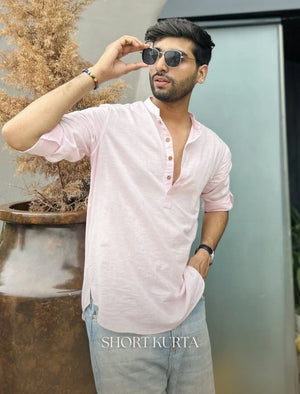
- Slightly shorter kurta lengths (just above the knee) prevent the outfit from overwhelming your frame
- Fabrics with slight texture (linen, raw silk) add body visually
What to avoid:
- Oversized, baggy kurtas that swallow your frame
- Extremely long lengths that exaggerate thinness
2. Athletic or Muscular Build
Men with broader shoulders and a defined upper body need a kurta that accommodates the frame without looking tight across the chest.
What works:
- Tailored-fit kurtas that follow the body's natural taper at the waist
- Slightly structured shoulders rather than overly loose drapes
- V-necks or open collars that elongate the neckline
- Mid-length kurtas that balance a strong upper body
What to avoid:
- Boxy, oversized cuts that hide muscle definition completely
- High, tight collars that make the neck and shoulders look compressed
3. Average or Rectangular Build
This is one of the easiest body types to dress because most kurta styles work well. The focus here is choosing details that add personality rather than correcting proportions.
What works:
- Classic straight-fit kurtas in mid-length
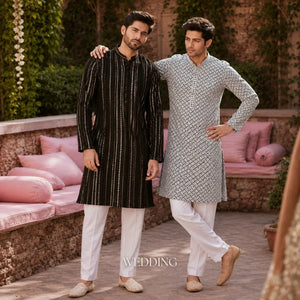
- Experimenting with prints, embroidery, and color since the silhouette is already balanced
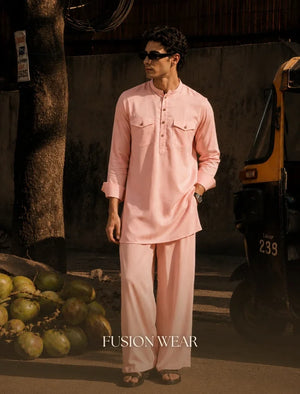
- Both traditional and fusion-style kurtas tend to suit this frame
4. Heavyset or Broad Build
For a fuller frame, the goal is to elongate the body and avoid bulk-adding fabric or patterns.
What works:
- Straight or A-line kurtas that fall vertically without clinging
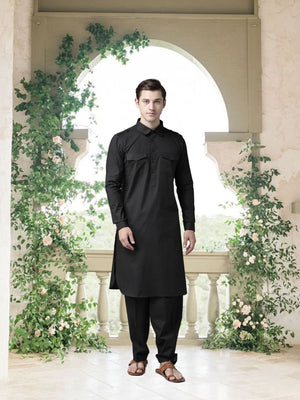
- Darker, solid tones or subtle vertical patterns that create a slimming effect
- Slightly longer lengths (below the knee) that elongate the frame
- Open or V-neck collars to avoid a closed-off appearance near the neck
What to avoid:
- Tight-fitted kurtas that cling to the midsection
- Large, busy prints or heavy horizontal embroidery bands
- Very short kurta lengths that cut the body at the widest point
5. Tall and Lean Build
Tall men often have the advantage of carrying most kurta styles well, but the wrong proportions can make the frame look even narrower.
What works:
- Longer kurta lengths that complement height
- Layered looks with a Nehru jacket or bandi to add visual weight
- Patterned or textured fabrics that break up a long, lean line
What to avoid:
- Extremely fitted, narrow-cut kurtas that emphasize thinness
6. Shorter Build
For shorter men, the goal is to create the illusion of added height and avoid overwhelming the frame.
What works:
- Shorter to mid-length kurtas (avoid anything past mid-thigh to knee)
- Vertical lines, subtle prints, or piping that elongate the body
- Slim or straight-cut pajamas/churidars rather than baggy bottoms
- Monochrome or tonal color pairings to create a longer visual line
What to avoid:
- Long kurtas that shorten visual height
- Oversized fits that add bulk without proportion
Universal Tips for a Flattering Kurta Fit
Regardless of body type, a few fitting principles apply across the board:
- Shoulder seams should sit at the edge of your shoulder - not drooping down the arm or pulling tight.
- Sleeve length should end at the wrist bone, allowing natural movement.
- Chest and waist should allow two fingers of ease - comfortable, not restrictive.
- Length should be proportional to height, not just trend-based.
- Fabric weight affects drape - heavier fabrics hold structure better for larger frames; lighter fabrics suit leaner builds.
Fabric and Color Choices That Complement Body Type
- Slim builds: Textured fabrics like linen or raw silk add dimension
- Muscular builds: Breathable cotton blends prevent clinginess
- Heavier builds: Matte fabrics in darker tones minimize visual bulk
- Tall frames: Rich, patterned fabrics balance long lines
- Shorter frames: Lightweight fabrics in solid tones keep the look streamlined
Final Thoughts
The perfect men's kurta dress isn't about the most expensive fabric or the most elaborate embroidery - it's about proportion. When the cut, length, and fit align with your body type, traditional wear for men instantly looks more polished, confident, and intentional.
The next time you're shopping for traditional wear, don't just look at color and design - pay attention to fit. A kurta tailored to your body type doesn't just look better in photos; it feels better to wear, move in, and live in throughout the day. That balance of comfort and visual harmony is exactly what separates an ordinary kurta from one that truly elevates your style.


