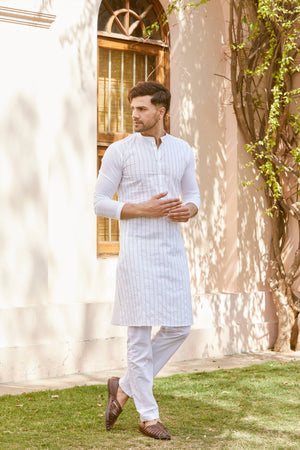
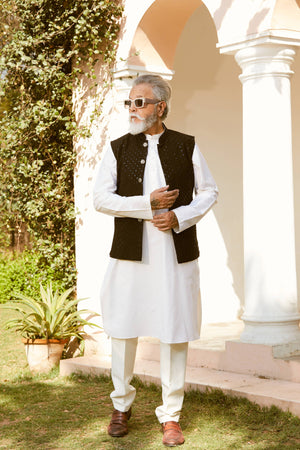
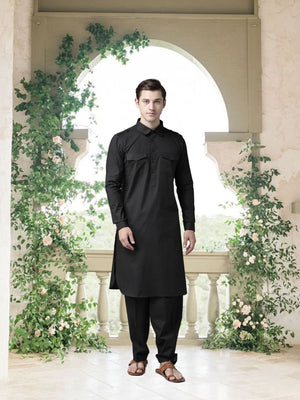
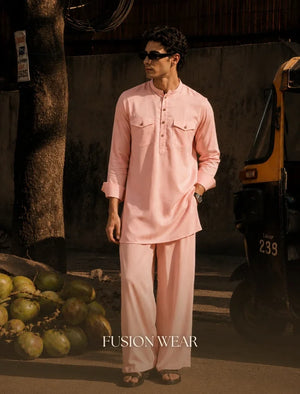
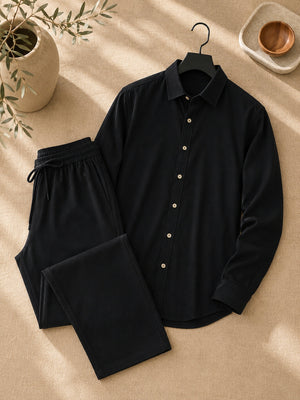
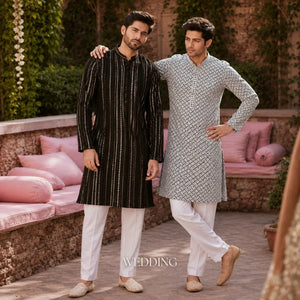
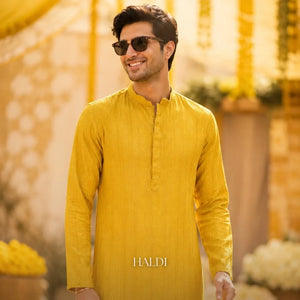
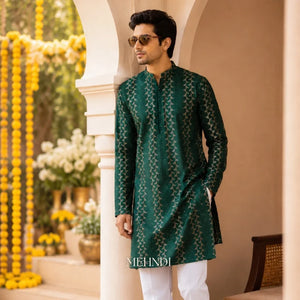


The Regal Edit: Discovering Sophisticated Co-Ord Sets for Contemporary Indian Men

There is a particular hush that falls over old palace courtyards at dusk, when the sandstone still holds the warmth of the afternoon sun and the shadows of jharokhas stretch long across the marble. It is in that hush, somewhere between memory and imagination, that the story of Indian menswear truly begins - not in a boutique or a fashion week runway, but in the durbars, the havelis, and the quiet dignity of men who understood that clothing was never just fabric. It was language. It spoke of lineage, of restraint, of power worn lightly.
Centuries later, that same language is being rewritten for a new generation, not through discarding tradition, but through reimagining it. This is the story of how Stylish Co-Ord Sets for Men have become the modern vessel for something far older than fashion itself: heritage.
A Wardrobe Once Reserved for Kings
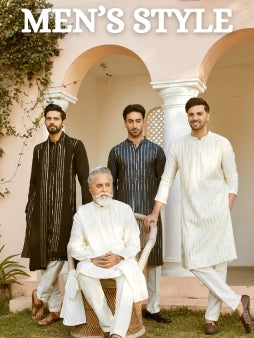
To understand the emotional weight of a co-ord set today, one must first understand what came before it. In royal courts across Rajasthan, Awadh, and the Deccan, a nobleman's attire was never assembled carelessly. The angarkha, the bandhgala, the sherwani, each of these was conceived as a complete visual statement, a coordinated ensemble where the upper garment and lower garment spoke to one another in fabric, in embroidery, in silhouette. Matching was not incidental; it was intentional, a signal of refinement in an era when a man's presence in a room was often announced before he spoke a single word.
This idea, of garments designed in conscious harmony rather than random pairing, is the quiet ancestor of what we now call the co-ord set. The contemporary version may have shed the weight of brocade and the formality of court protocol, but it has inherited something far more valuable: the philosophy of intentional dressing.
From Durbar to Doorstep: The Evolution of Coordinated Dressing
The journey from royal courts to modern wardrobes was neither instant nor accidental. As India moved through decades of cultural shift, post-independence identity building, and eventually a globalized fashion consciousness, traditional silhouettes began quietly merging with contemporary cuts. Kurta sets gave way to more structured pairings. Nehru jackets found new life over relaxed trousers. And slowly, a new category emerged, one that respected heritage without being weighed down by it.
This is precisely the space that a brand like See Designs has chosen to inhabit. Rather than treating heritage as costume, something to be worn only during festivals or ceremonial occasions, See Designs approaches it as a living inheritance, something that can walk into a boardroom, a wedding reception, or a quiet evening gathering with equal grace. Their design philosophy does not ask contemporary Indian men to choose between tradition and modernity. It insists, instead, that the two were never truly separate.
The Anatomy of a Regal Co-Ord Set
What makes a co-ord set feel royal rather than merely coordinated? The answer lies in details that are easy to overlook and impossible to ignore once noticed.
Fabric is the first storyteller. Where mass-produced separates often rely on synthetic ease, a heritage-inspired co-ord set leans into breathable cotton silks, textured linens, and hand-feel fabrics that echo the tactile richness once reserved for nobility. There is a reason silk and fine cotton dominated royal wardrobes long before comfort became a marketing term. They simply age with dignity.
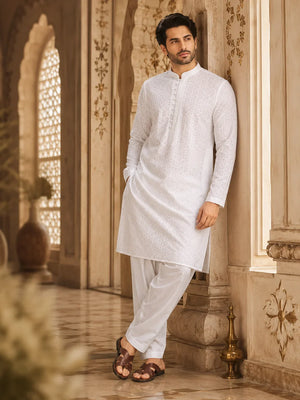
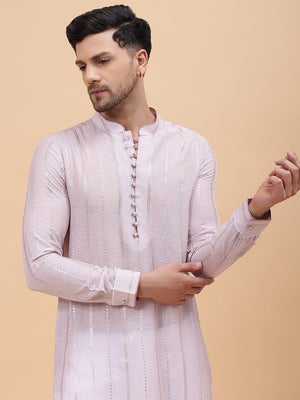
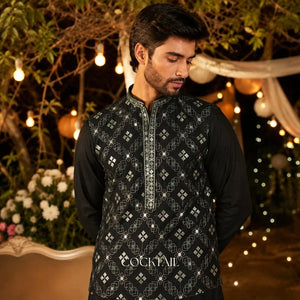
Then comes embroidery, though not the kind that overwhelms. The regal aesthetic favors restraint: a subtly embroidered collar, a hand-finished placket, a border that hints at Mughal or Rajput motifs without shouting for attention. This is where See Designs distinguishes itself most clearly, treating embellishment as punctuation rather than paragraph, understanding that true royalty was never loud.
Silhouette completes the story. Structured shoulders reminiscent of the bandhgala jacket, paired with straight or slightly tapered trousers, create a shape that feels architectural, almost sculptural, echoing the posture-conscious tailoring of court attire while remaining entirely wearable for a modern man's daily rhythm.
Why Modern Men Are Returning to Heritage
There is a quiet cultural shift happening across Indian metros and beyond, a generation of men who grew up surrounded by Western fast fashion now consciously seeking garments with narrative depth. In a world of algorithm-driven trends and disposable style cycles, there is something deeply grounding about wearing a garment that carries centuries of design language within its seams.
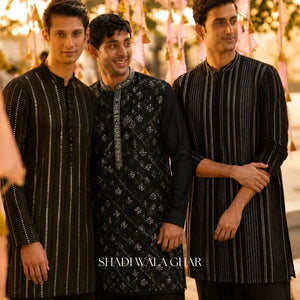
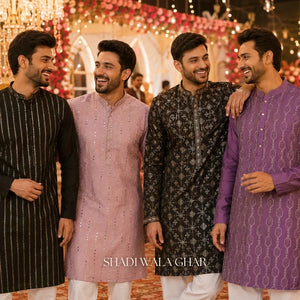
This is not nostalgia for its own sake. It is identity-seeking through aesthetics, a desire to dress in a way that acknowledges where one comes from while still moving confidently through contemporary spaces, corporate offices, destination weddings, art gallery openings, festival celebrations. Stylish Co-Ord Sets for Men answer this desire precisely because they refuse to be confined to a single occasion. They are equally at home under string lights at a sangeet as they are beneath the soft focus lighting of a formal dinner.
Wearing History, Lightly
Perhaps the most powerful aspect of this revival is how effortlessly it sits on the body. Royal attire, for all its grandeur, was often heavy, layered, and demanding of its wearer. The modern reinterpretation, particularly as crafted by houses like See Designs, strips away that physical burden while preserving the emotional one, the sense that what you are wearing means something.
To slip into a well-tailored co-ord set today is, in a small but real way, to inherit a fragment of that old courtyard hush, the quiet confidence of a man who did not need ornamentation to command a room, only intention. It is a reminder that heritage does not have to be preserved behind glass in a museum. It can be lived in, moved in, worn to a wedding, and passed down not as an object, but as a sensibility.
The Regal Edit, Redefined
In the end, the resurgence of coordinated menswear in India is not simply a trend cycle finding its next silhouette. It is a cultural homecoming, a recognition that the aesthetic instincts of maharajas and noblemen still have something profound to teach contemporary dressing. Brands like See Designs are not inventing something new; they are translating something ancient into a language the modern man can wear with ease, pride, and quiet distinction. And in doing so, they are ensuring that the story of royal Indian menswear does not end in the archives, but continues, one thoughtfully coordinated ensemble at a time.


